Paprika Anime Summary: All Details, Plot Analysis, and Review
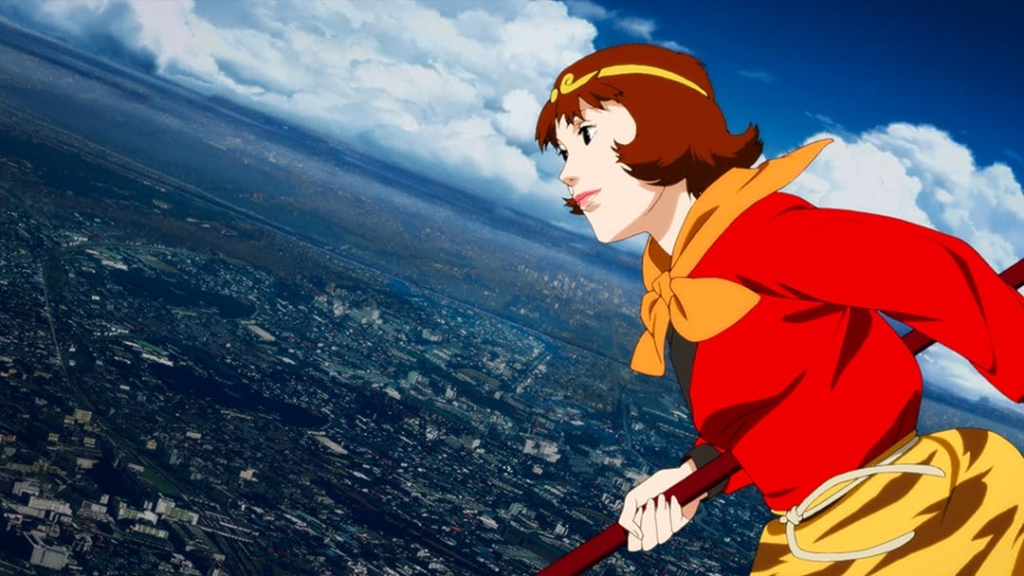
Welcome back to AniReload. When discussing the absolute pinnacle of psychological anime, there is one title that continuously stands above the rest, demanding to be experienced rather than just watched. Released in 2006, the breathtaking masterpiece known as Paprika remains one of the most visually stunning, intellectually stimulating, and wildly imaginative animated films ever created. Directed by the late, legendary Satoshi Kon and animated by the powerhouse studio Madhouse, this film completely shattered the boundaries between the conscious world and the subconscious mind. Long before Hollywood blockbusters like Christopher Nolan’s Inception popularized the concept of infiltrating dreams, Paprika was already exploring the terrifying and beautiful consequences of what happens when human technology attempts to tame the wild, untethered landscape of our sleeping minds. Upcoming Anime List in August 2025 — Top New Series, Movies & OVAs to Watch
If you are a fan of psychological thrillers, surrealism, or simply breathtaking hand-drawn animation, this film is a mandatory addition to your watchlist. In this comprehensive article, we are going to dive deep into every single detail of the film. We will break down the complex plot, analyze the dual nature of its incredible protagonist, explore the underlying themes of reality versus illusion, and guide you on exactly where you can watch this masterpiece today. Grab a comfortable seat, because we are about to take a deep dive into the dream parade.
Essential Anime Details and Watch Information
| Category | Details |
| Title | Paprika (パプリカ) |
| Director | Satoshi Kon |
| Animation Studio | Madhouse |
| Release Year | 2006 |
| Genre | Psychological, Sci-Fi, Mystery, Thriller |
| Based On | The 1993 novel by Yasutaka Tsutsui |
| Where To Watch | Rent/Buy on Amazon Prime Video / Apple TV |
The Revolutionary Premise: Unlocking the Subconscious
The world of Paprika is set in a near-future society where psychiatric treatment is on the verge of a massive, unprecedented revolution. A brilliant but dangerously naive inventor named Dr. Kosaku Tokita has created a groundbreaking device known as the “DC Mini.” This small, headset-like piece of technology allows psychiatrists to directly enter the dreams of their patients, effectively recording and sharing the subconscious experience. The ultimate goal of the DC Mini is to help therapists visually navigate a patient’s hidden anxieties, repressed memories, and deep-seated traumas to treat severe mental illnesses from the inside out.
However, the technology is still in its prototype phase, which means it completely lacks basic security protocols and access restrictions. When three of these unrestricted DC Minis are mysteriously stolen from the secure research facility, the situation instantly escalates from a corporate theft to a full-blown existential crisis. Because the stolen devices lack safety filters, the thief has the unprecedented ability to force their way into the minds of anyone connected to the dream-sharing network, whether the victims are sleeping or awake. The brilliant head of the research team, Dr. Atsuko Chiba, quickly realizes that if the thief is not stopped, they could effectively brainwash, terrorize, and mentally destroy the entire population.
A Tale of Two Women: Dr. Atsuko Chiba and Paprika
To truly understand the narrative of this film, you have to understand the brilliant duality of its main character. In the real world, Dr. Atsuko Chiba is a fiercely intelligent, incredibly stern, and deeply repressed woman. She is the ultimate professional, maintaining a cold and calculated exterior to navigate the high-pressure, male-dominated world of scientific research. She hides her emotions, denies her romantic feelings for her colleague Tokita, and lives a rigid, structured life.
However, inside the dream world, she takes on an entirely different persona: Paprika. Paprika is the ultimate embodiment of Atsuko’s repressed desires and uninhibited freedom. She is a fiery, charismatic, and endlessly energetic “dream detective” who operates illegally outside the confines of the official research facility to help patients. While Atsuko is bound by the strict laws of physics and corporate bureaucracy, Paprika can fly, transform her body, and bend the dreamscape to her will. Paprika serves as the ultimate therapist because she is purely empathetic and highly intuitive, acting as the warm, emotional counterpart to Atsuko’s cold, analytical mind. Throughout the story, the underlying character arc is Atsuko’s desperate need to reconcile these two halves of her identity, learning to accept that the wild, emotional Paprika is just as much a part of her true self as the brilliant scientist.
The Stolen Prototypes and The Terrifying Dream Parade
The main conflict of the film officially kicks off when the “dream terrorist” begins using the stolen DC Minis to infect the minds of the research staff. The terrorist weaponizes a collective, chaotic dream that violently forces itself into the waking consciousness of its victims. This infection manifests as the film’s most iconic and deeply unsettling visual motif: the grand parade.
This parade is an absolute masterpiece of surrealist animation. It is a massive, endlessly marching procession of discarded household appliances, giggling frogs, terrifying traditional Japanese dolls, religious artifacts, and marching band instruments. It is loud, vibrant, colorful, and completely devoid of logic or reason. When a person’s mind is infected by this parade, they lose their grip on reality entirely. They begin speaking in nonsensical, poetic gibberish and often attempt to throw themselves out of windows or step into traffic, fully believing they are flying or ascending to a higher plane of existence. The parade represents the ultimate loss of conscious control, a wild manifestation of the collective unconscious rising up to swallow the logical world whole. As the film progresses, the parade grows larger and more powerful, consuming more minds and threatening to break out of the dreamscape entirely.
Detective Konakawa’s Cinematic Journey
Running parallel to the main investigation is the emotional B-plot involving Detective Toshimi Konakawa. Konakawa is a grizzled, highly stressed police detective who has been secretly receiving illegal dream therapy from Paprika to cure his crippling anxiety and insomnia. His dreams are uniquely framed as a series of distinct cinematic genres—a Tarzan-style jungle adventure, a slick James Bond spy thriller, a melodramatic romance, and a gritty murder mystery.
As Paprika navigates his mind, we learn that Konakawa suffers from intense guilt surrounding a repressed memory from his youth. He once had a best friend with whom he made amateur short films, but Konakawa ultimately abandoned his friend and his passion for cinema to pursue a safe, practical career in law enforcement. When his friend later died, Konakawa internalized the guilt, developing a subconscious hatred for movies because they reminded him of his perceived betrayal. Satoshi Kon uses Konakawa’s storyline as a brilliant meta-commentary on the power of film and storytelling. Paprika essentially uses the language of cinema to heal the detective, helping him face his past, forgive himself, and eventually use his own cinematic dreams to fight back against the dream terrorist.
The Masterminds: The Chairman and Dr. Osanai
As the mystery unravels, the true culprits behind the stolen DC Minis are revealed to be the very people running the company: the wheelchair-bound Chairman Seijiro Inui and his lackey, Dr. Morio Osanai. The Chairman’s motivations are deeply philosophical and profoundly hypocritical. He vehemently opposes the DC Mini project, arguing that dreams are the last sacred sanctuary for the human soul, a holy place that should never be invaded or quantified by cold, scientific technology.
However, rather than simply shutting the project down, the Chairman desires to become a god within the dreamscape. Because his physical body is old and paralyzed, he uses the DC Mini to enter the dream world where he is powerful, mobile, and omnipotent. He manipulates the insecure, jealous Dr. Osanai—who has an obsessive, twisted infatuation with Atsuko Chiba—to do his dirty work. In one of the film’s most disturbing and visually striking scenes, Osanai captures Paprika within a dream and literally peels back her skin like a butterfly’s chrysalis, revealing the sleeping Atsuko trapped underneath. It is a chilling representation of the male gaze and the desire to forcibly strip away a woman’s independence to control her.
The Breathtaking Climax: When Reality Unravels
The final act of Paprika is an absolute triumph of animated storytelling that pushes the medium to its absolute limits. The Chairman’s power grows so immense that the barrier between the waking world and the dream world shatters completely. The chaotic, nonsensical dream parade violently spills into the real-world streets of Tokyo. Buildings bend, the sky cracks open, and everyday citizens are swept up in the terrifying, colorful madness. The Chairman himself manifests in the real world as a massive, towering nightmare creature composed of shadows and pure delusion, threatening to plunge the entire planet into an eternal, waking sleep.
Amidst the chaos, Dr. Tokita, who has been swallowed by the dream and turned into a giant toy robot, tries to eat Atsuko. In this moment of ultimate crisis, Atsuko’s ghostly projection appears. She finally stops hiding behind her cold, professional facade and admits that she has been deeply in love with the genius, child-like Tokita all along. By finally accepting her true feelings and embracing her own vulnerability, Atsuko successfully merges with her alter-ego, Paprika.
This beautiful union of logic and emotion, of reality and dreams, gives birth to an entirely new entity. A baby emerges from Tokita’s robotic shell, rapidly aging into a serene, fully realized version of the Atsuko/Paprika hybrid. This ultimate form represents total psychological balance. She steps forward and literally inhales the Chairman’s massive nightmare form, consuming the darkness and restoring balance to the world. It is a bizarre, poetic, and deeply satisfying conclusion that proves that logic alone cannot defeat madness; it requires a healthy embrace of our deepest emotions and dreams.
The Masterpiece Soundtrack by Susumu Hirasawa
It is entirely impossible to discuss this anime without dedicating significant praise to its musical score. Composed by the legendary Susumu Hirasawa, the soundtrack is just as integral to the film’s identity as the animation itself. Hirasawa utilized a unique blend of techno-pop, synthesized vocaloids, and sweeping orchestral arrangements to create a soundscape that feels both futuristic and ancient.
The main theme, “Parade,” is an overwhelming, chaotic, and infectious track that perfectly captures the terrifying cheerfulness of the dream infection. Meanwhile, the opening track, “The Girl in Byakkoya,” provides an energetic, upbeat backdrop as we watch Paprika seamlessly bounce through different realities during the opening credits. Hirasawa’s music does not just accompany the visuals; it actively drives the narrative forward, acting as the beating heart of the dreamscape.
The Lasting Legacy of a Visionary Director
In 2026, the influence of Paprika can still be felt rippling through both the anime industry and Western cinema. Its exploration of the human psyche, its groundbreaking transitions, and its fearless rejection of traditional, linear storytelling solidified Satoshi Kon as one of the greatest directors of his generation. Tragically, Satoshi Kon passed away just a few years after the film’s release, making Paprika his final completed masterpiece. It stands as a brilliant, lasting testament to his genius—a film that challenges its audience to look beyond the surface of reality and embrace the beautiful, chaotic, and terrifying depths of their own imaginations. If you have not yet experienced this visual triumph, do yourself a massive favor, find a high-quality screen, and let the dream parade sweep you away.
